

Making carbon visible by creating engaging images, animations and web tools.
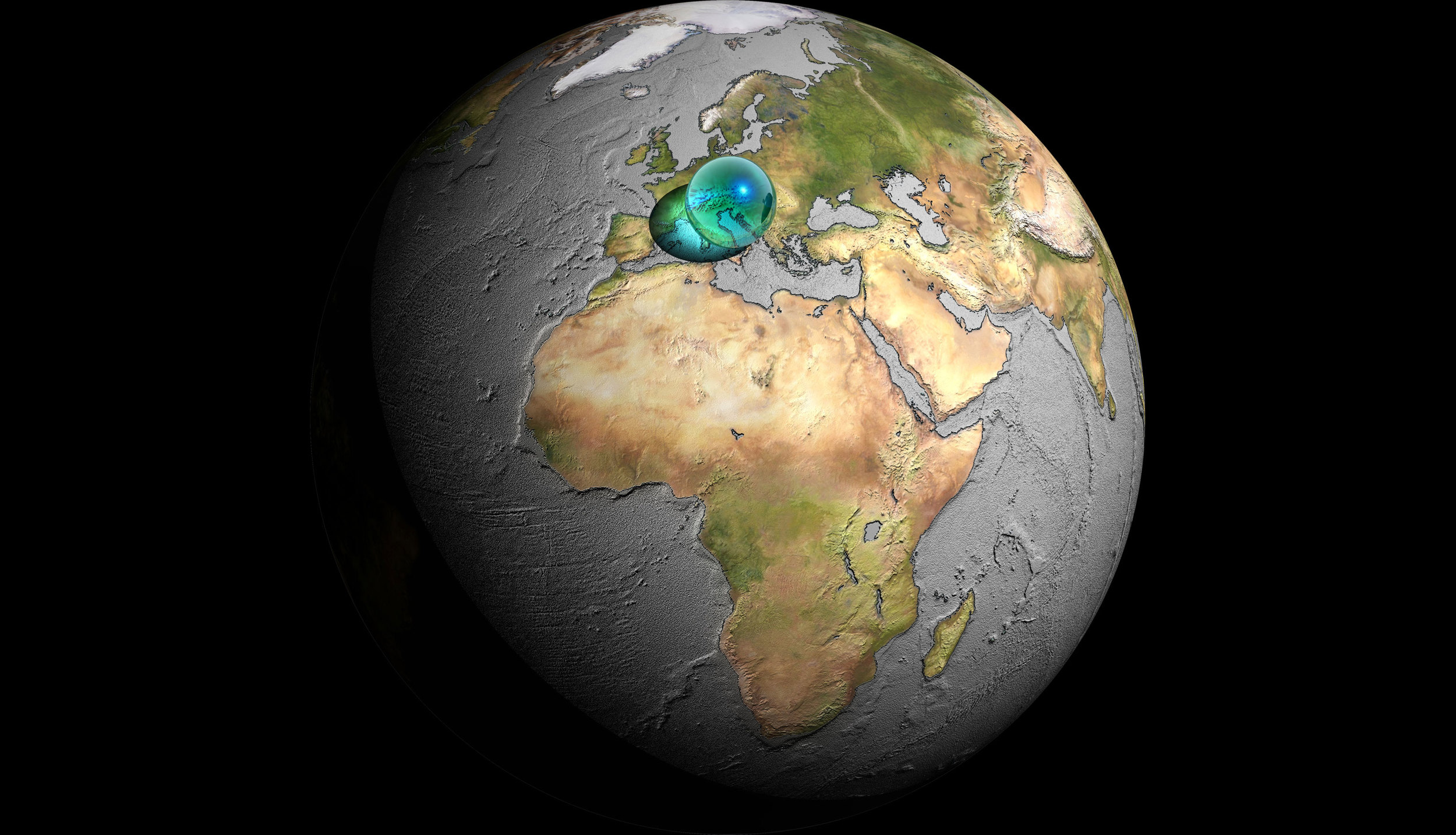
Image: All the air in the atmosphere (5,140 trillion tonnes) pictured as a ball at sea-level density
Carbon Visuals is a business dedicated to communicating carbon data more effectively. We help draw attention to emissions, enable people to understand the quantities involved, and thereby feel better informed to make decisions.
Our images appear in presentations, social media, staff engagement campaigns, reports and events. Clients include ADAS, BBC, BP, DECC, Environmental Defense Fund, Guardian News and Media, Plymouth University, Royal College of Music and UCLH.
MPs in the UK will vote on the Energy Bill on Tuesday. The Bill has no clean energy targets beyond 2020, which will undermine investment in clean energy. As the diagram shows, we have no time to lose.
Human induced climate change is claimed to be the greatest challenge of the 21st century. But man-made carbon emissions continue to rise - the 400ppm carbon milestone causes barely a ripple. At the same time the warnings from climate scientists get clearer and more focused. Despite bizarre weather increasing around the globe, business as usual is generally the order of the day.
I am intrigued as to why, in society at large, there is little grass roots support, no loud and clear call for action to address this issue.
Carbon Visuals has submitted a proposal for a panel discussion - Making carbon visible in cities - at the prestigious SXSW Eco conference in Austin, Texas in October.
We have put together a great panel that includes senior people from New York City Mayor’s Office of Long-Term Planning & Sustainability, C40 Cities Climate Leadership Group, CDP Cities program and Environmental Defense Fund.
But for this to go ahead we need people to vote for our panel by end Friday 24th May! Click here to vote for our panel, or here to see other prospective panels.
The people charged with driving down emissions are often specialists with expertise in engineering, systems and measurements. But when it involves getting other people to change, the way forward can be less than obvious. Something more than data is needed.
The number and mixture of comments that we have received since releasing the New York Emissions film through You Tube, Twitter and email has been really useful as a means of assessing its impact. And generally aiding us in best understanding how visuals can really help.